Why Fall and Winter Are a Smart Time to Build Your Colorado Outdoor Space
October 2, 2026·8 minute read·Outdoor Design Colorado team
Most Colorado homeowners start thinking about the backyard on the first warm weekend in April. By then the best landscape crews already have full calendars, and the patio you pictured for Memorial Day becomes a Fourth of July project, or a next year project. There is a better way. With the right planning, fall and winter are some of the most productive months to build hardscapes along the Front Range, so your outdoor space is finished and waiting when spring arrives.
Key takeaways
Denver averages about 52 days of 50°F or warmer weather from November through February, according to NOAA's 1991 to 2020 climate normals.
December, January and February are Denver's driest months, each averaging well under half an inch of precipitation.
Patios, retaining walls, fire features, outdoor kitchens and pergola footings can all be built in the cold months when the contractor plans for it.
Plants and sod wait for spring, after the Front Range's average last frost around mid May.
The numbers behind building in the off season
Colorado winters have a reputation, but the data tells a more useful story for anyone planning a project. The Denver area gets real stretches of mild, dry weather between storms, and the months when crews work best on hardscapes line up well with the months most homeowners are not using their yards.
52Average days at 50°F or warmer in Denver from November through February
0.35 inAverage December precipitation, the driest month of Denver's year
36 inDenver frost line; structure footings go below it
May 15Average last frost on the Front Range, the signal to plant
Denver, month by month
Days at 50°F or warmerNormal high
Tap or hover a month. Data: NOAA 1991 to 2020 climate normals, Denver International Airport. Darker bars are months with normal lows under 40°F, when concrete needs cold weather protection.
Two things stand out in the chart. First, even in the coldest months Denver averages around 11 days a month at 50°F or warmer, and November averages almost 19. Second, winter is dry. December averages just 0.35 inches of precipitation, while May, the wettest month, averages 2.16 inches. Spring is when rain and wet soil push projects back, not winter.
Why a fall or winter build pays off
You are ready on day one of spring
Build in the cold months and your patio, fire pit and outdoor kitchen are done before the first warm weekend. You spend spring and summer using the space instead of watching a crew work in it.
More time for design and better scheduling
Spring is the busiest season for landscape contractors. In fall and winter, design meetings, revisions and material selections get the attention they deserve, and construction is scheduled with care instead of squeezed into a spring rush.
Fewer rain delays
Wet soil is one of the biggest causes of delays and poor compaction. Denver's driest months are December through February, which gives crews long dry stretches between storms to dig, build and compact a proper base.
Approvals happen in the background
HOA design reviews and any permits can be worked through over the winter, so paperwork never eats into your summer.
Plants go into a finished yard
Once the hardscape is complete, planting in mid May means new trees, shrubs and sod go straight into prepared beds with no heavy equipment or foot traffic around them.
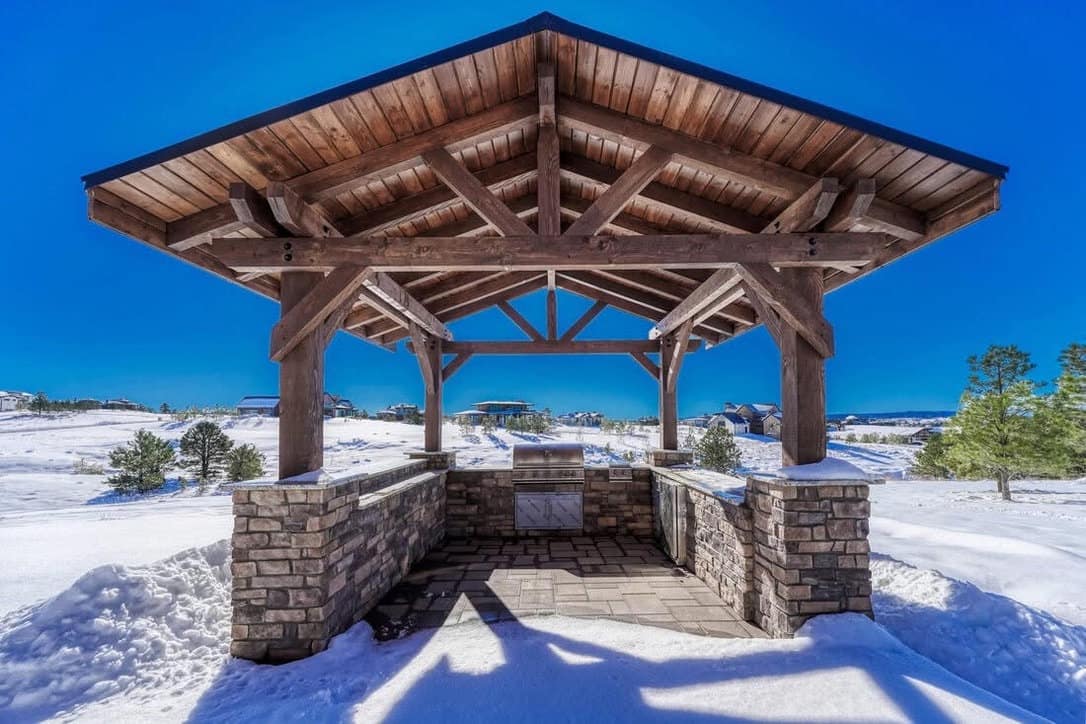
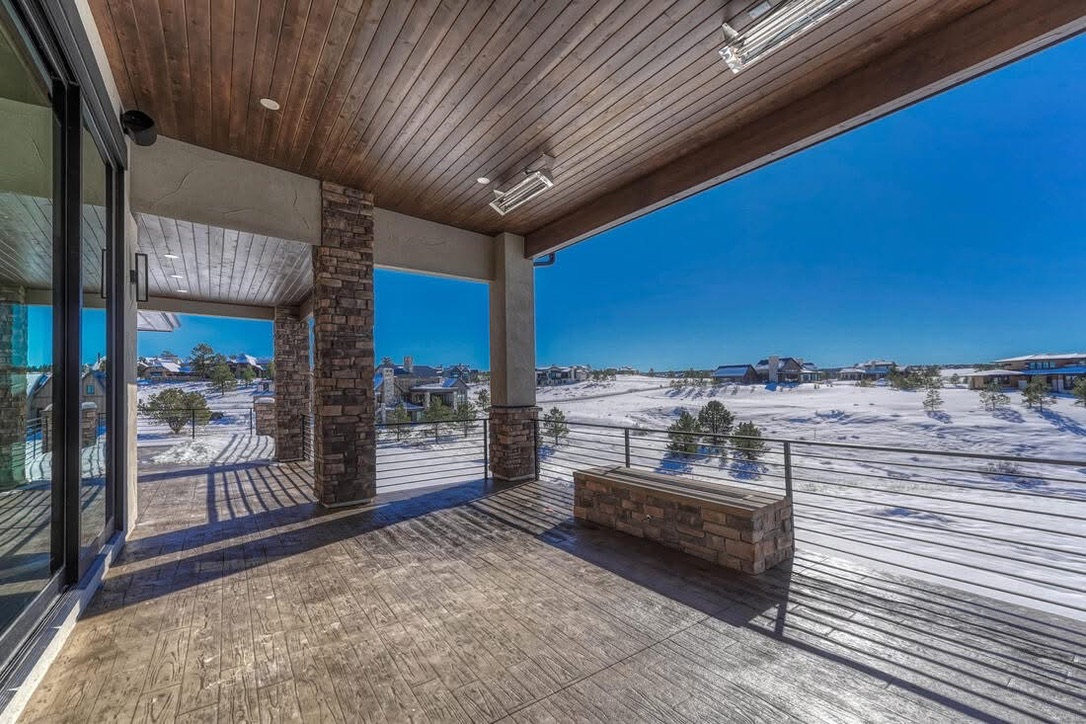
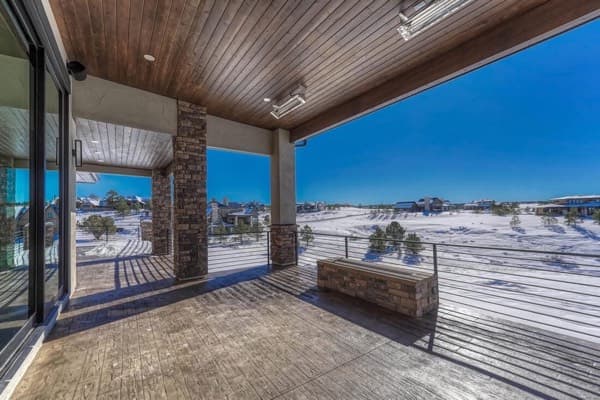
A covered patio built for year round use, photographed in winter.
What can be built in fall and winter?
Most of what makes an outdoor living space is hardscape: stone, pavers, concrete, structures and fire features. Those can be built through the cold months. Living things are the exception. Tap or hover each card to see how it works.
Build now
Paver and flagstone patios
Pavers sit on a compacted gravel base and a thin layer of bedding sand. Industry guidance is clear that pavers and sand never go over a frozen base, so a planned crew excavates and compacts on unfrozen days and covers the work when snow is on the way.
Build now
Retaining walls and stone steps
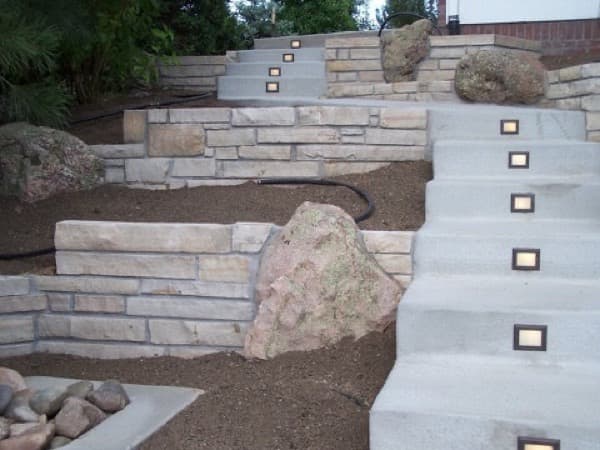
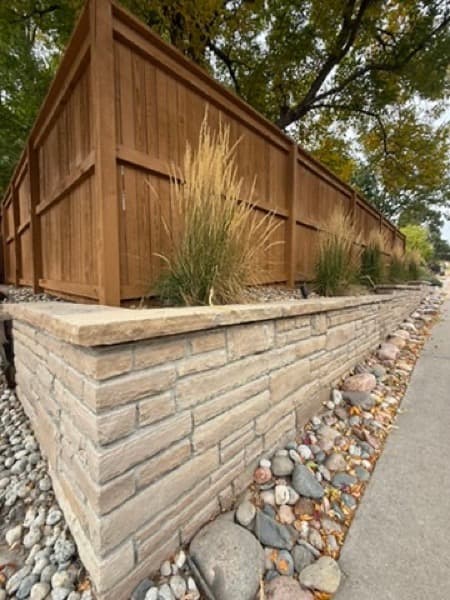
Segmental and natural stone walls are built course by course on a compacted footing. Winter is a good time to fix a slope, add steps and get drainage right before spring runoff.
Build now
Fire pits and fireplaces
Fire features are mostly stonework and gas or wood burning hardware. Mortared stone is kept from freezing while it cures, and gas lines are handled by licensed professionals.
Build now
Outdoor kitchens
Kitchen frames, stone veneer and countertops can all be built through the cold months, so the grill is ready for the first warm weekend.
Build now
Pergolas, pavilions and covered patios
Structures need footings that bear below the frost line. In the City and County of Denver that line is 36 inches, so posts and footings are set deep enough to stay put through freeze and thaw cycles.
Build with protection
Concrete patios and walkways
Concrete can be poured in winter when the crew follows cold weather practices: heated water or accelerating admixtures, insulated blankets and protection whenever air temperatures fall below 40°F while the concrete gains strength.
Plan now, finish in spring
Irrigation
Sleeves and main lines can go in while the ground is workable, so nothing has to be dug up later. The system is started, tested and adjusted once freezing nights are over.
Wait for spring
Plants, trees and sod
Most planting waits until after the Front Range's average last frost in mid May. A finished patio and walls mean new plants go straight into prepared beds with no construction traffic around them.
Planning makes the difference
A winter build is not a summer build with coats on. It only works when the contractor plans for Colorado conditions from the start. Here is what a properly planned fall or winter project looks like.
Excavation and base work are scheduled for dry, unfrozen days using the ten day forecast.
Footings for pergolas and covered patios bear below Denver's 36 inch frost line.
Open excavations and stockpiles are covered before snow so the base stays dry.
Planting, irrigation start up and final touches are scheduled for spring from the beginning.
Weather days are built into the schedule, and you hear about changes before they happen.
Skip these steps and winter work can lead to settling, cracking or heaving. Follow them and a winter project is built to the same standard as a summer one, often with a calmer schedule.
Plan backward from your first evening outside
When do you want to be enjoying your new space?
Typical timing for a backyard hardscape project. Your design consultation sets the real schedule for your property.
Want your backyard ready for spring?
Book a free fall design consultation. We will walk your property, talk through your ideas and map out a winter build schedule.
Can concrete really be poured during a Colorado winter?
Yes, with the right practices. The American Concrete Institute treats it as cold weather work when the air temperature falls, or is expected to fall, below 40°F while the concrete is protected. Crews then use heated materials or accelerating admixtures and insulated blankets so the concrete gains strength before it can freeze. Read the ACI 306 summary.
Will a patio built in winter heave or settle?
Not when it is built correctly. The base is excavated and compacted on unfrozen ground, the right depth of gravel goes in for the soil, and drainage is planned so water does not sit under the patio. Pavers and bedding sand never go over a frozen base.
When should new plants go in?
After the last spring frost. CSU Extension lists the average last frost on the Front Range around May 15, so we schedule most planting for mid to late May. See CSU Extension.
Does snow stop the project?
Some days, yes. A good winter schedule includes weather days. Work resumes once the site is clear and the ground is workable, and open excavations are covered so snow does not soak the base.
When should I call to be ready for spring?
September through November is ideal. That leaves time for the design consultation, renderings, approvals and a relaxed construction window before planting season.

Comments
Questions or ideas about this article? Share them below. Comments appear after a quick review by our team.