
Blog / Seasonal planning
Why October, November and December Are the Best Months to Build Your Outdoor Space
Drier weather, open schedules and a finished yard by spring. Here is why the last three months of the year are the smartest time to build a patio, retaining wall or fire pit in Douglas County and the Denver area.
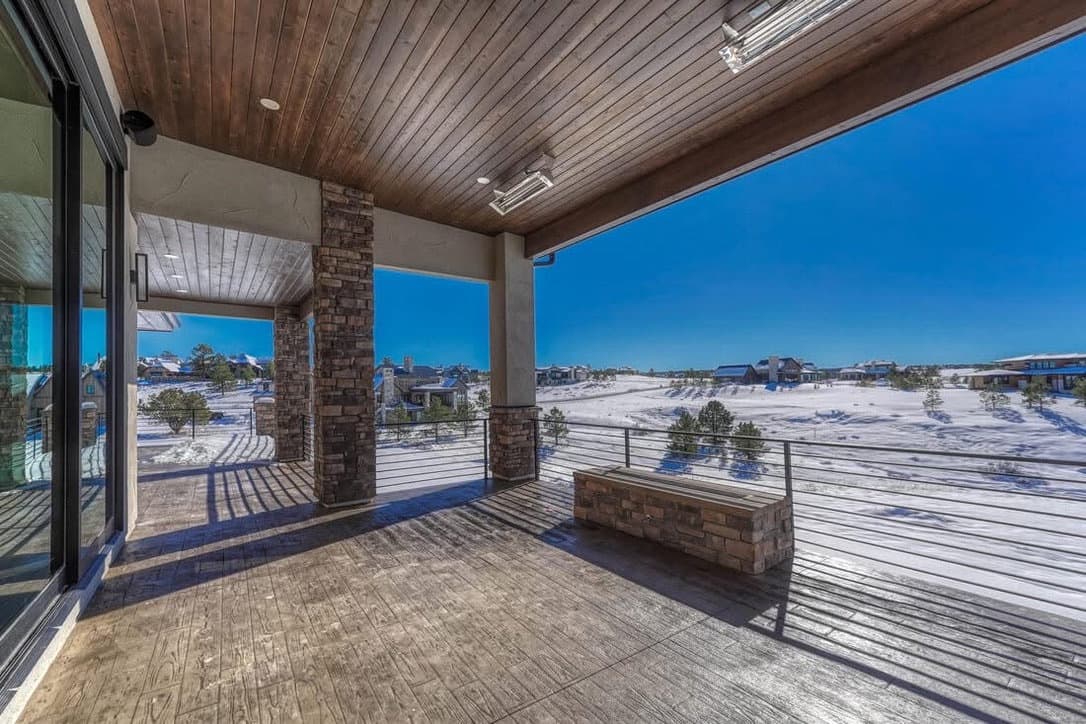
Most homeowners call a landscape contractor on the first warm weekend in April. By then everyone else has had the same idea, and the patio you wanted for Memorial Day turns into a midsummer project. After years of building outdoor spaces along the Front Range, we think the best time to start is the stretch before that rush: October, November and December.
Here is why, with the weather data, the building standards we follow, and what can and cannot be built before the new year.
The weather is on your side
Colorado’s fall and early winter are drier than most people expect. NOAA’s official climate normals for Castle Rock, which average 30 years of measurements from 1991 to 2020, show October, November and December among the driest months of the year, while late spring and summer are the wettest (NOAA National Centers for Environmental Information).
| Month | Average high | Average low | Precipitation |
|---|---|---|---|
| October | 64.8°F | 34.6°F | 0.85 in |
| November | 53.9°F | 25.7°F | 0.79 in |
| December | 45.7°F | 18.0°F | 0.69 in |
| May | 68.4°F | 41.6°F | 1.97 in |
| June | 80.2°F | 50.5°F | 2.20 in |
| July | 85.7°F | 56.4°F | 2.32 in |
| August | 83.6°F | 54.7°F | 2.52 in |
Source: NOAA National Centers for Environmental Information, U.S. Climate Normals 1991 to 2020, Castle Rock, Colorado (station USC00051401). Precipitation includes the water in melted snow.
Dry ground matters more than cold air for most hardscape work. Wet, muddy soil is hard to dig and hard to compact, and rain is what most often pushes outdoor projects back. Castle Rock averages highs in the 60s in October and the 50s in November, so crews get long stretches of good working days between storms.
Your project gets more attention
Spring and early summer are the busiest months of the year for landscape and hardscape contractors, ours included. When you start in the fall, design meetings are not rushed, there is time to compare materials and revise plans, and construction can be scheduled around your calendar instead of a waiting list.
Approvals and rebates get done over the winter
Paperwork takes time. Many HOAs review landscape plans before work begins, and in new neighborhoods such as Macanta in Castle Rock, backyard plans must be approved by the town first, which can take up to 10 business days (Town of Castle Rock). Water rebates work the same way. Castle Rock Water requires you to apply before starting a ColoradoScape renovation and expects 2027 program details in April 2027 (Castle Rock Water), and Highlands Ranch Water’s turf replacement rebate reopens March 1, 2027 (Highlands Ranch Water). Designing in the fall means your approvals and applications are ready before the spring rush.
You start spring with a finished yard
Build in October, November and December and the patio, walls and fire pit are done before the first warm weekend. You spend spring using the space instead of watching a crew work in it, and new plants go into finished beds without heavy equipment driving over them.
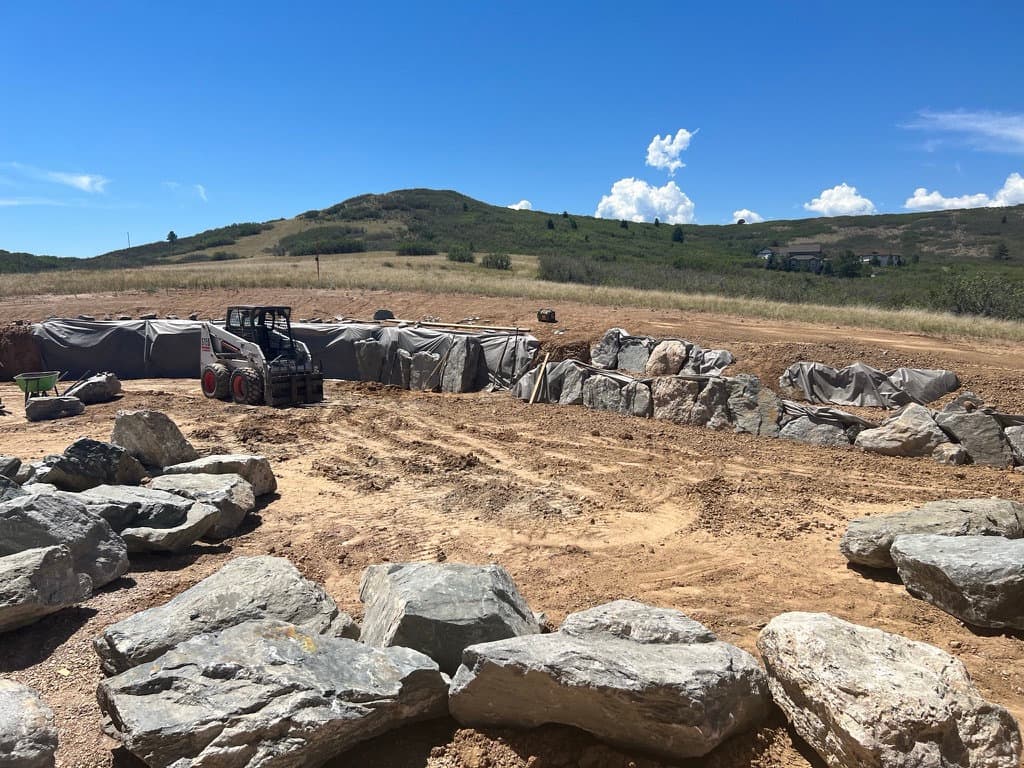
What we build in October, November and December
Paver and flagstone patios
Pavers sit on a compacted gravel base and a layer of bedding sand. The installation specification from the Concrete Masonry and Hardscapes Association says not to install sand and pavers over frozen base materials, or during heavy rain or snowfall. So we dig and compact on unfrozen days, cover open base work before storms, and lay pavers when conditions are right. A typical Front Range fall leaves plenty of those days.
Retaining walls, steps and boulder work
Walls and steps are built course by course on a compacted footing. Fall is a good time to fix a slope and get drainage right before spring runoff.
Fire pits, fireplaces and outdoor kitchens
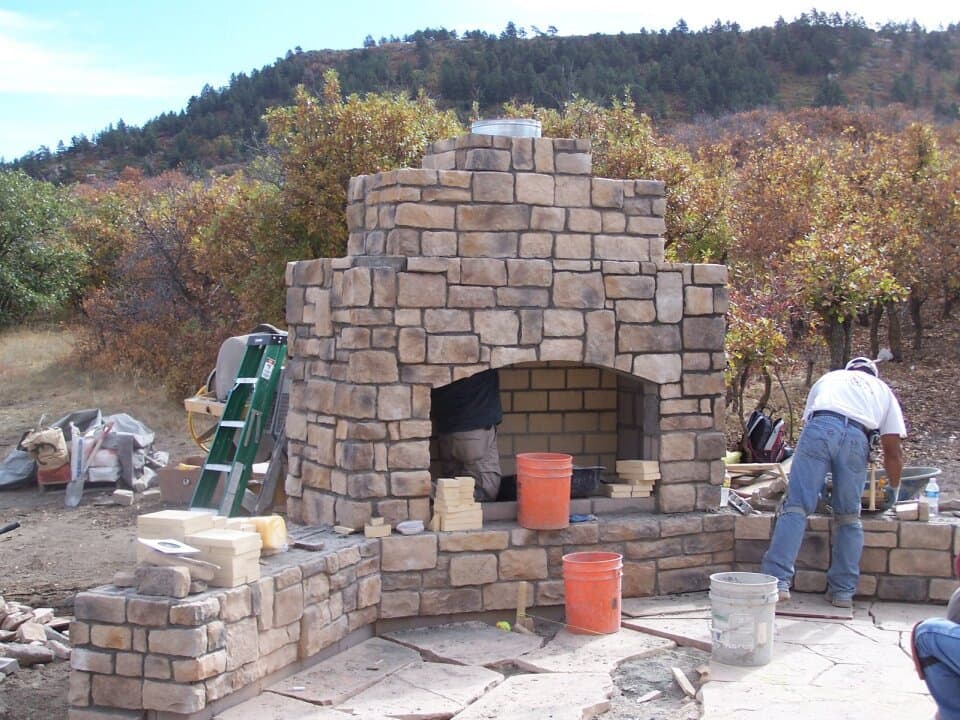
These are mostly stonework and hardware, so they suit fall construction well. Mortar and concrete are protected from freezing while they cure, and gas lines are installed by licensed professionals.
Pergolas and covered patios
Structures need footings that sit below the frost line. The Douglas County Building Division sets a minimum frost depth of 36 inches below finished grade, so posts and footings go deep enough to stay put through freeze and thaw cycles.
Concrete
Concrete can be poured in cold weather with the right precautions. The American Concrete Institute defines cold weather as a period when the average daily temperature stays below 40°F for more than three days in a row, and its Guide to Cold Weather Concreting covers protecting fresh concrete with insulation, heated materials and other measures until it gains strength. We follow those practices, and when a hard cold snap is in the forecast we schedule pours around it.
Trees, shrubs and other plants
Early fall is the planting window. The Colorado State Forest Service calls September 1 to about October 15 an ideal time to plant trees in Colorado, because the soil is still warm enough for roots to establish before winter. New plantings then need water through the dry months. CSU Extension recommends watering during long dry spells without snow cover, about once or twice a month, only when air and soil temperatures are above 40°F, and at midday so the water soaks in before night. After mid October, most planting waits for spring, after the Front Range’s average last frost on May 15 (CSU Extension).
Irrigation
Sleeves and main lines can go in while the ground is open, so nothing has to be dug up later. Sprinklers and drip are started and adjusted in the spring. In Castle Rock the irrigation season runs May 1 to September 30, and new plantings can apply for a temporary watering exemption, but none are granted in July (Town of Castle Rock). That is one more reason to have your planting ready early in the season.
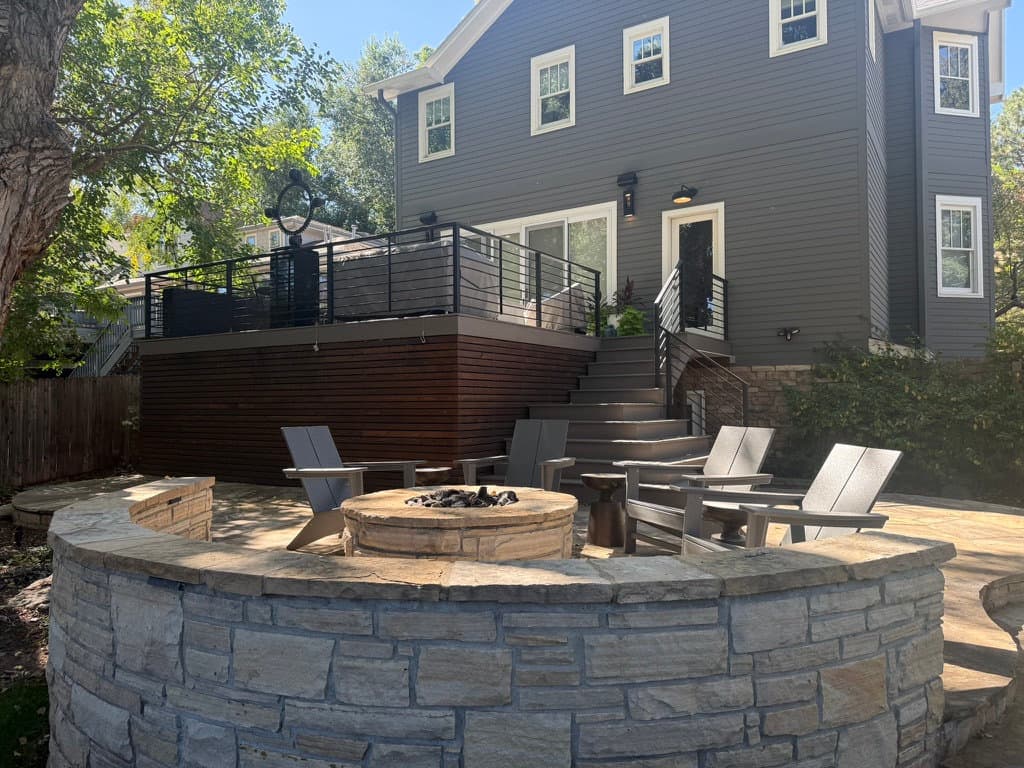
A typical fall build timeline
- October: design consultation, plans, material selections, HOA submittals, and any tree planting before the middle of the month.
- November: digging, base work, footings, walls and patios.
- December: fire features, outdoor kitchens, structures and finishing work, weather permitting.
- Spring: planting, irrigation start up and final touches.
Every property is different, so your design consultation sets the real schedule. Weather days are built in from the start, and you hear about changes before they happen.
Where we build
We build patios, hardscapes and outdoor living spaces in Castle Rock, Parker, Highlands Ranch, Lone Tree, Castle Pines, Larkspur and across Douglas County and the Denver metro area. Thinking about replacing lawn while you are at it? Read the benefits of xeriscaping and xeroscaping. See our custom patios, hardscapes and masonry and decks and covered patios.
Want your backyard ready by spring?
Book a free fall design consultation. We will walk your property, talk through your ideas and map out a build schedule for this fall and winter.
Book a free consultationCommon questions
Is it too late to start a project in November or December?
No. Patios, walls, fire features and structures can be built through December when the work is planned around the weather. Planting and irrigation start up wait for spring.
Can pavers be installed in cold weather?
Yes, as long as the base is not frozen. The industry specification says sand and pavers should not go over frozen base materials or be installed during heavy rain or snowfall, so we schedule base work and paving for unfrozen days.
Can concrete be poured in winter?
Yes, with cold weather practices. The American Concrete Institute treats more than three days of average temperatures below 40°F as cold weather, and fresh concrete is then protected until it gains strength.
When should trees and shrubs be planted?
The Colorado State Forest Service calls September 1 to about October 15 ideal for planting trees. Later in the year, we usually schedule planting for spring, after the average last frost on May 15.
Does snow stop the project?
Some days, yes. A good fall schedule includes weather days, and open excavations are covered before storms so the base stays dry.
Weather figures are NOAA’s 30 year averages for Castle Rock and will not match any single year. Building requirements vary by city and HOA, so your design consultation confirms what applies to your property. This article is general information, not engineering or legal advice.
Sources
- ACI Committee 306. (2016). Guide to cold weather concreting (ACI 306R 16). American Concrete Institute.
- American Concrete Institute. (n.d.). Cold weather concrete. Topics in Concrete. Retrieved October 9, 2026.
- Castle Rock Water. (n.d.). Rebates: Residential ColoradoScape Renovation. Town of Castle Rock. Retrieved October 9, 2026.
- Colorado State Forest Service. (2026, October 1). Planting a tree this autumn? Don’t fall into these common mistakes. Colorado State Forest Service News.
- Colorado State University Extension. (n.d.). Soil temperatures, frosts and planting dates (PlantTalk Colorado 1626). Retrieved October 9, 2026.
- Concrete Masonry and Hardscapes Association. (2021, November 3). Guide specification: Pavers on aggregate base (Section 32 14 13).
- Douglas County Building Division. (2026). Pre submittal handout: adopted building codes and design criteria, effective July 1, 2026.
- Highlands Ranch Water. (n.d.). Turf replacement program. Retrieved October 9, 2026.
- Klett, J. E., and Cox, R. (2004, reviewed 2025). Fall and winter watering of plants and trees (Fact Sheet 7.211). Colorado State University Extension.
- NOAA National Centers for Environmental Information. (2021). U.S. Climate Normals 1991 to 2020, monthly normals: Castle Rock, CO (station USC00051401). Retrieved October 9, 2026.
- Town of Castle Rock. (n.d.). Landscape design for homeowners. Retrieved October 9, 2026.
Comments
Questions or ideas about this article? Share them below. Comments appear after a quick review by our team.