
Blog / Water wise landscaping
The Benefits of Xeriscaping and Xeroscaping for Douglas County Homes
Xeriscaping and xeroscaping are not the same thing. Here is the difference, and why either one pays off with lower water bills, rebates and less upkeep in Castle Rock, Parker, Highlands Ranch and across Douglas County.
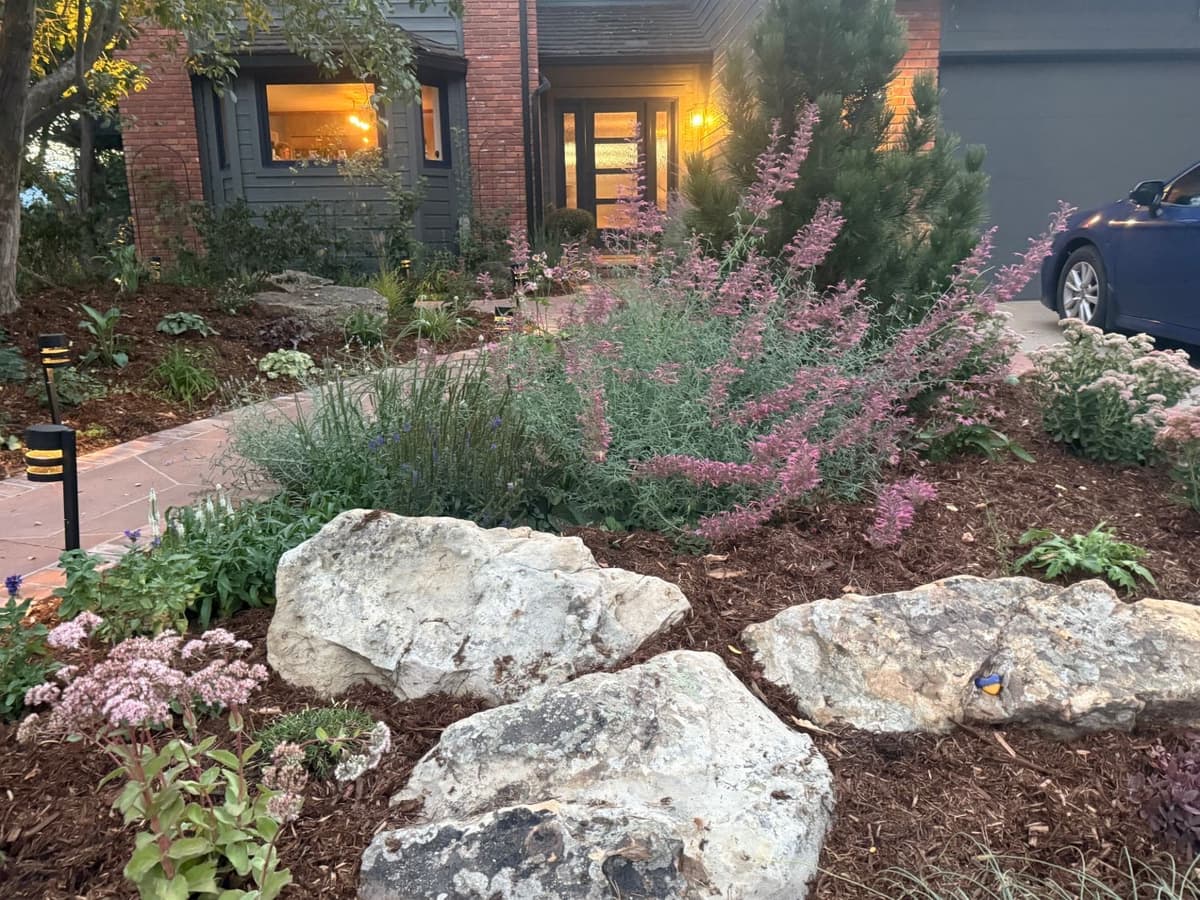
If you are researching water wise yards in Douglas County, you have probably seen two words used almost interchangeably: xeriscaping and xeroscaping. They are not the same thing. Knowing the difference is the first step to choosing the right yard, so let’s start there.
Xeriscaping vs xeroscaping: the difference
Xeriscaping is a complete method for designing a landscape that needs little water. It uses native and drought tolerant plants grouped by how much water they need, improved soil, mulch, efficient drip irrigation and a smaller, practical lawn. Denver Water coined the word in the early 1980s, working with the Denver Botanic Gardens and Colorado State University’s Cooperative Extension, to encourage native and drought tolerant plants (Denver Water), and it still teaches seven xeriscape principles: planning and design, soil improvements, efficient irrigation, plant zones, mulches, turf alternatives and maintenance. A xeriscape is full of living plants.
Xeroscaping, often said and spelled “zeroscaping,” is the name most people use for a yard made mostly of rock, gravel and boulders, with few or no plants. It saves water by replacing plants with stone rather than by choosing and watering plants carefully.
Put simply, a xeriscape saves water through design and plant choice, and a xeroscape saves water by using rock in place of plants. The two get confused because many people picture rocks when they hear xeriscape. The City of Fort Collins makes the same point: xeriscape is often thought of as a look of rocks and dry plants, but it is really a process for designing a landscape that is water wise and resilient (City of Fort Collins).
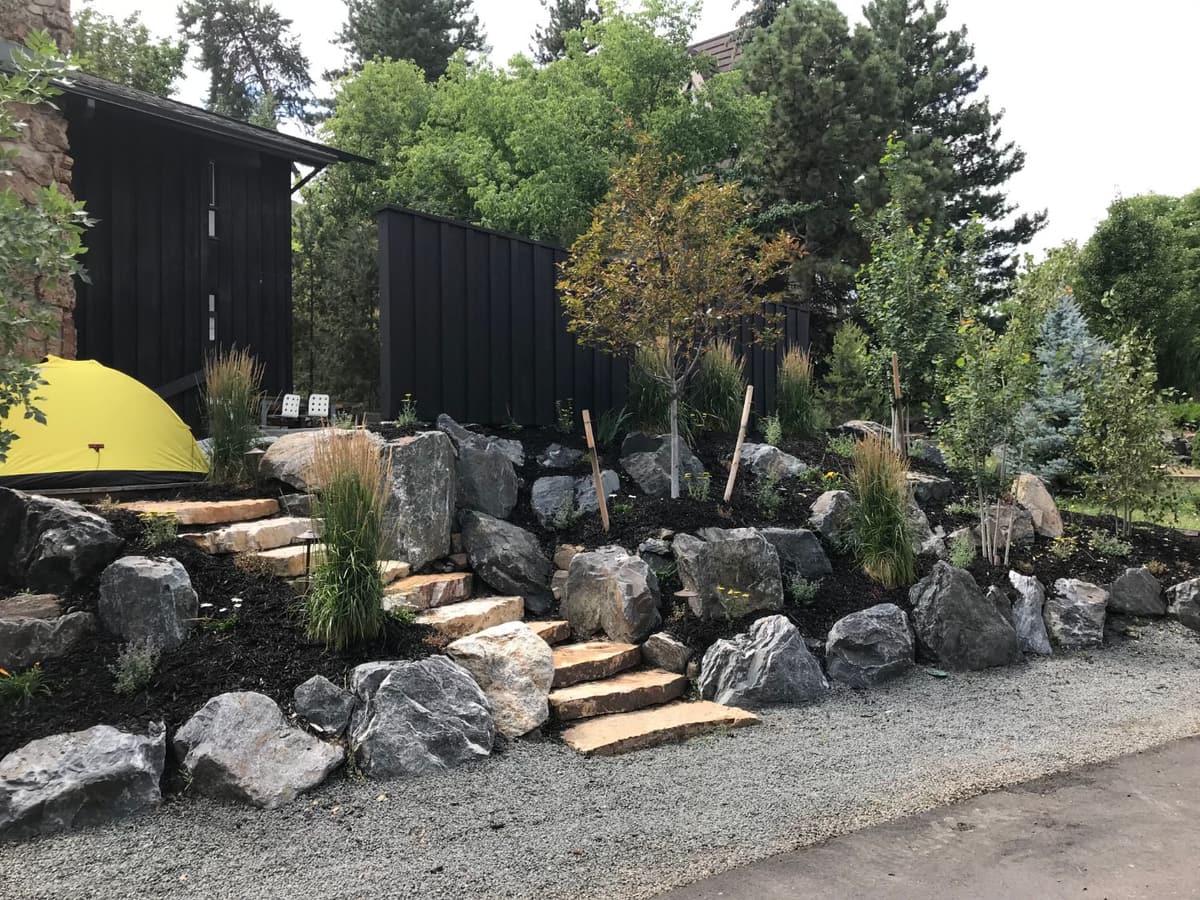
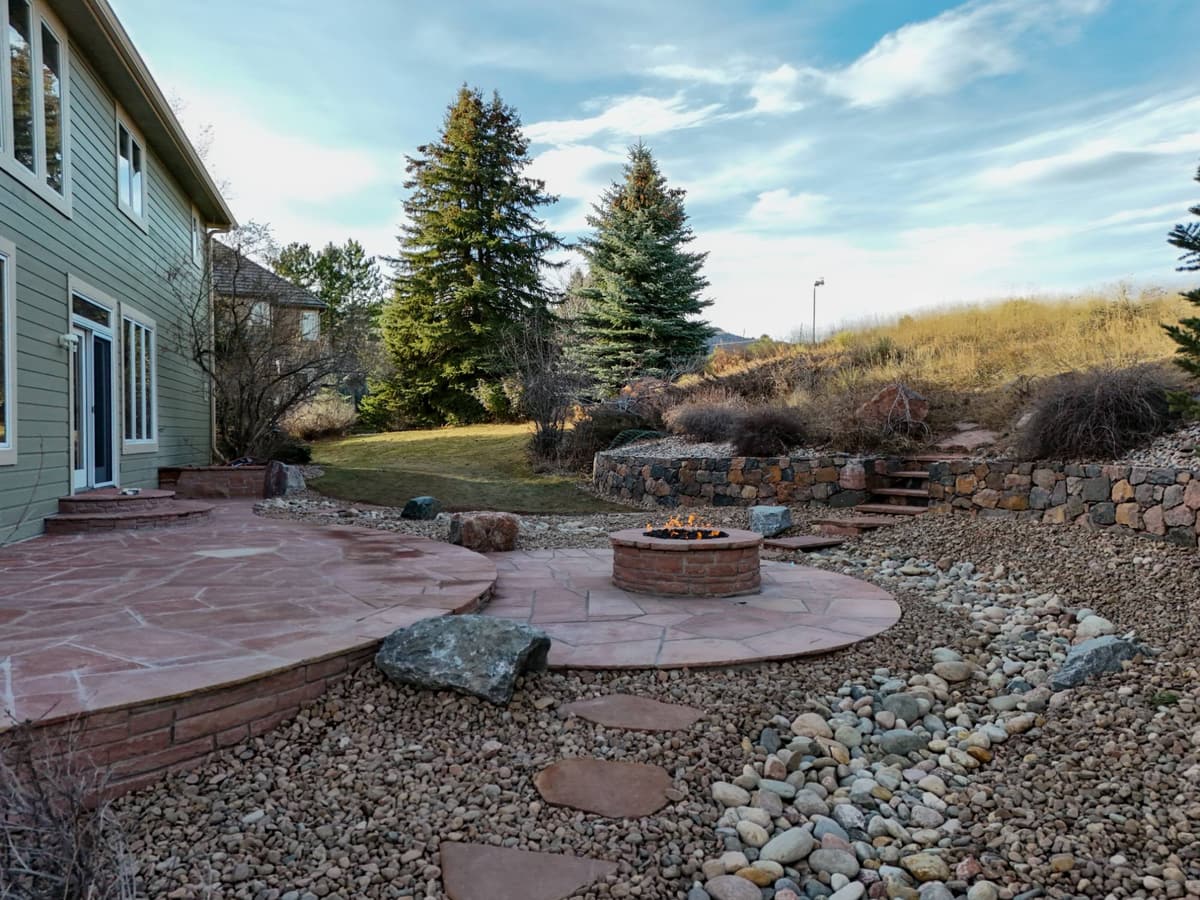
| Xeriscaping | Xeroscaping | |
|---|---|---|
| What it is | A water wise design method | A rock and gravel yard |
| Plants | Many native and drought tolerant plants | Few or none |
| Watering | Drip irrigation, grouped by plant need | Little or none |
| Look | Color, texture and seasonal change | Clean, structured and minimal |
| Upkeep | Low once plants are established | Lowest, mainly weeding and tidying rock |
| Summer heat | Plants and mulch help keep soil cool | Large areas of unshaded rock store and radiate heat |
| Castle Rock rebate | Can qualify when it replaces lawn | The design must include plants to qualify |
Sources: Denver Water; Colorado State University Extension, Xeriscape mulches; Castle Rock Water rebate rules. See the full list at the end of this article.
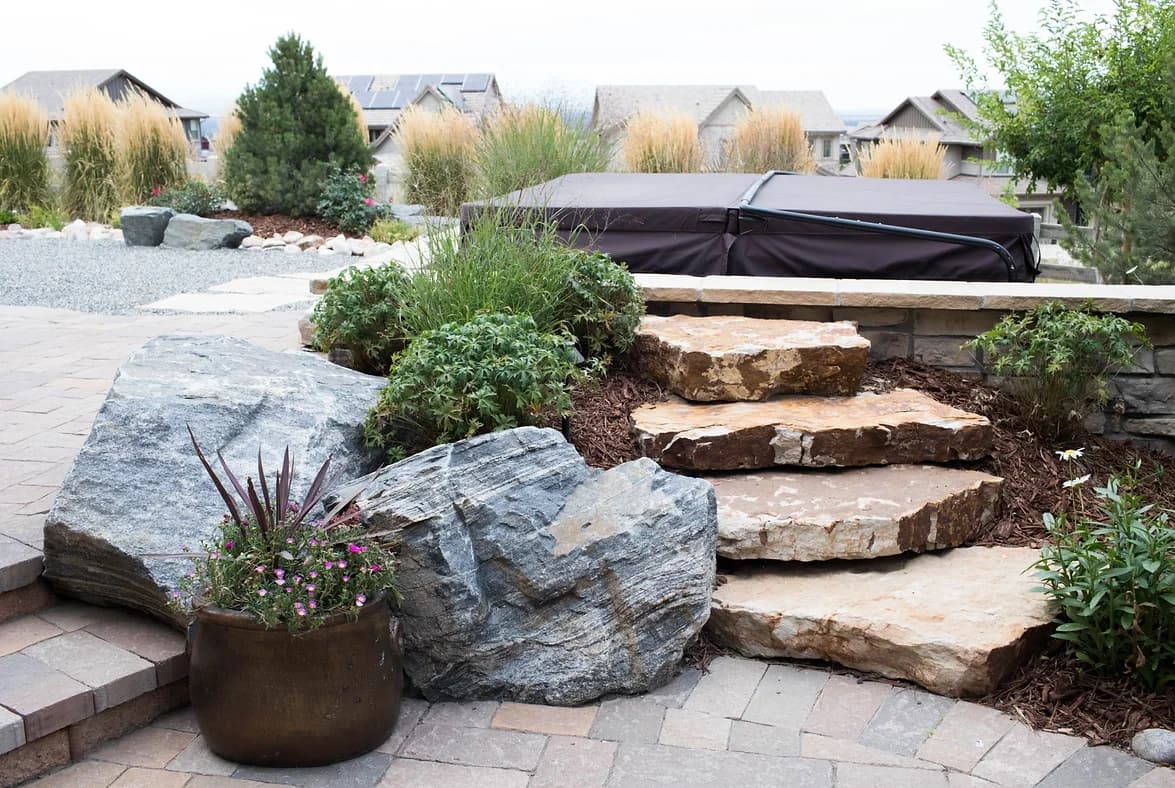
Both have a place, and we design and build both. Most of the yards we create blend the two: planted beds of perennials, ornamental grasses and shrubs where you want color, and rock, boulders and flagstone on slopes, side yards and paths. The rest of this article covers why either approach pays off in Douglas County.
Why water is such a big deal in Douglas County
Every summer, homeowners across Douglas County watch the same thing happen. The lawn looks great in May, the watering schedule tightens in July, and by August the bluegrass is brown at the edges while the water bill keeps climbing. In July 2026, the Town of Castle Rock moved to mandatory Stage 2 restrictions, limiting outdoor watering to two days a week with a goal of cutting water use by 25 percent, Colorado Politics reported.
Colorado’s Front Range receives an average of less than 15 inches of rain a year, and more than half of the water used in homes is applied to landscapes, according to Colorado State University Extension. Nationally, the U.S. Environmental Protection Agency’s WaterSense program puts outdoor use at more than 30 percent of household water, and as much as 60 percent in arid regions. It also estimates that as much as 50 percent of the water used outdoors is lost to wind, evaporation and runoff from inefficient irrigation.
Douglas County feels this more than most places. Water is expensive to bring to the south metro area, and the providers that make up the South Metro Water Supply Authority serve most of the county’s residents while working to stretch every supply. That is why rules, rates and rebates look so similar from Highlands Ranch to Larkspur. In Castle Rock, town officials say outdoor irrigation accounts for more than 75 percent of summer water use (Colorado Politics). The yard is where the savings are.
The benefits of xeriscaping and xeroscaping
Lower water bills
Bluegrass is thirsty. Denver Water says many of its customers use 18 gallons of water per square foot or more each year on bluegrass lawns, and it treats 12 gallons per square foot as a good goal for an efficient mixed landscape (Kirk, 2019). A 1,000 square foot lawn watered at that rate takes roughly 18,000 gallons a year. Replace it with drought tolerant plants on drip and most of that demand goes away, and it is the summer water that tiered rates charge the most for. Castle Rock, for example, gives each home a water budget and explains how outdoor budgets are cut during drought stages in its drought restriction guide, which pushes heavy lawn watering into pricier tiers sooner.
Water that actually reaches the roots
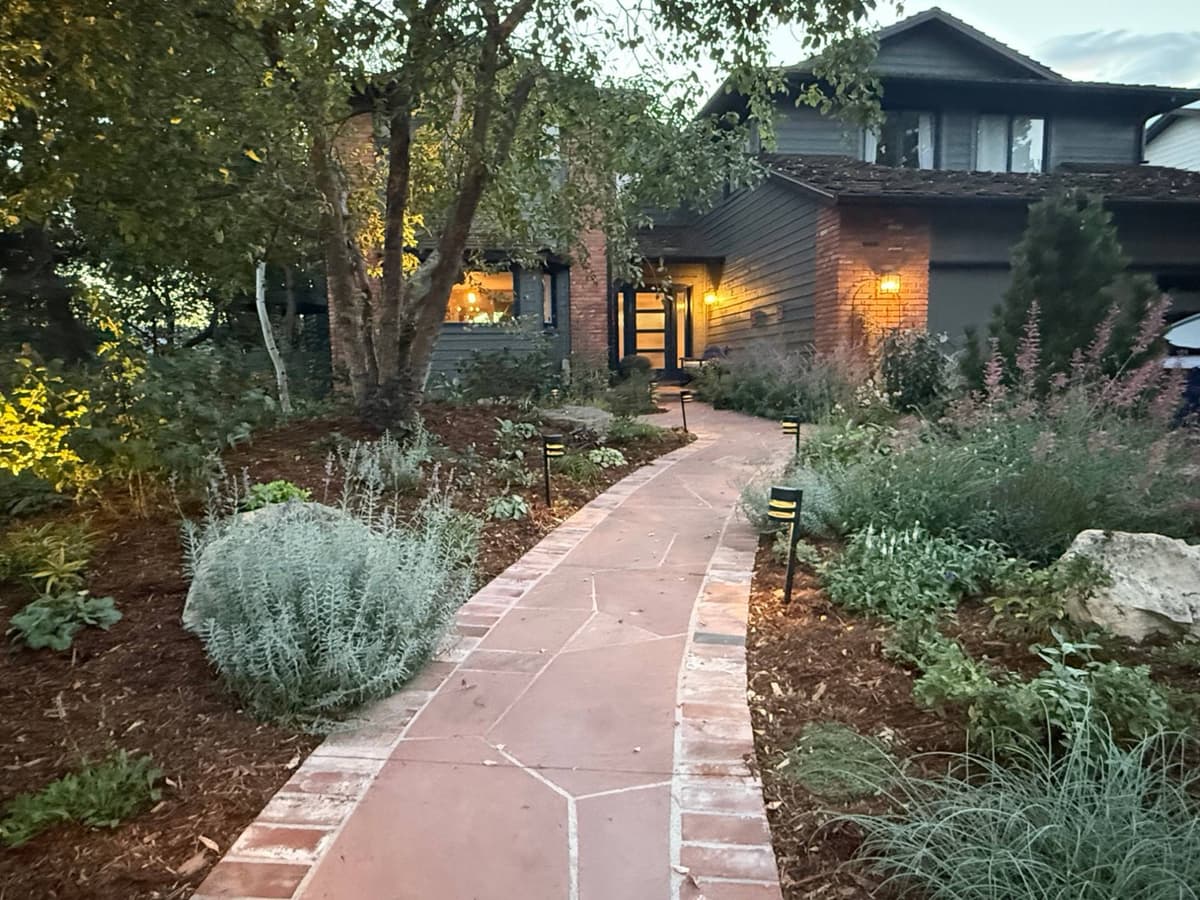
Planted xeriscapes are usually watered with drip lines instead of spray heads. Colorado State University Extension reports that drip irrigation exceeds 90 percent efficiency, while sprinkler systems are 50 to 70 percent efficient (Wilson and Bauer, Fact Sheet 4.702). Less water lost to overspray and evaporation means more of every gallon you pay for goes to the plants.
A yard that holds up under watering limits
When a two day watering schedule arrives, a bluegrass lawn has nowhere to go but brown. Drought tolerant plants watered deeply and less often are built for exactly that situation, which is the approach Denver Water recommends in its xeriscape principles. In our experience, an established xeriscape looks much the same in a restricted summer as it does in a wet one.
Less mowing and weekend upkeep
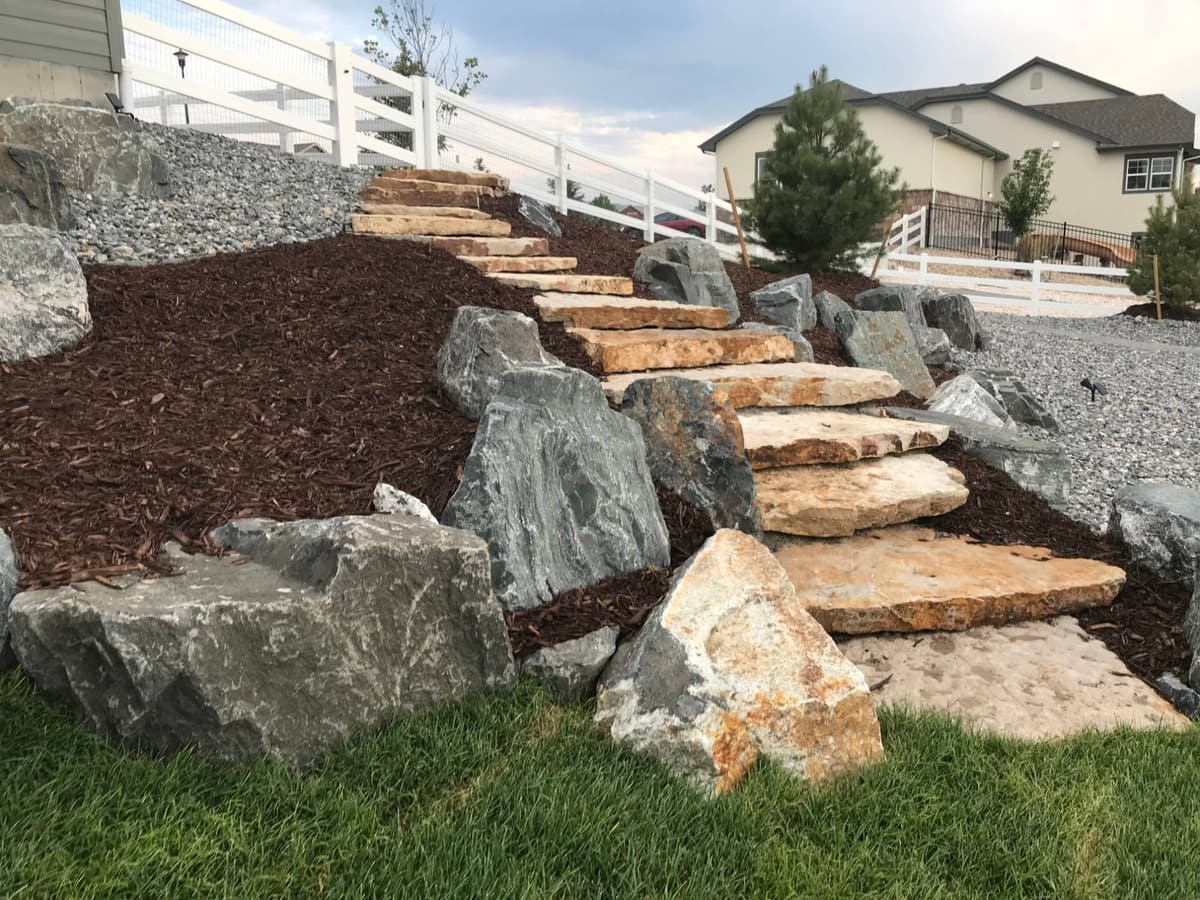
Fewer square feet of grass means less mowing, edging, fertilizing and reseeding. Be realistic about the first season, though. Denver Water notes that maintenance for a new xeriscape garden is similar to a traditional landscape but decreases over time, and CSU Extension describes xeriscapes as low maintenance rather than no maintenance. Good rock mulch and clean edging are what keep a xeroscape style yard tidy for years.
Rebates that pay for part of the work
In Douglas County, most incentives come from your water provider rather than the county. Three of the largest programs:
- Castle Rock Water pays $3.25 per square foot to replace high water use lawn with ColoradoScape, the town’s water wise landscape standard, and $1.00 per square foot for areas converted to concrete, decks or other hard surfaces. Projects must cover at least 400 square feet or the entire front yard, up to 1,500 square feet. The design must include plants, artificial turf does not qualify, and you must apply before work starts. The 2026 program is closed, and 2027 details are expected in April 2027 (Castle Rock Water).
- Highlands Ranch Water pays $2.50 per square foot for ColoradoScape conversions and $1.50 for approved low water turf, on projects from 250 to 2,000 square feet, after approval by the Highlands Ranch Community Association. Funding for 2026 is used up, and the program reopens March 1, 2027 (Highlands Ranch Water).
- Parker Water and Sanitation District customers can get a $750 lawn removal discount through Resource Central, offered with the South Metro Water Supply Authority, plus rebates for smart irrigation controllers, efficient nozzles and converting spray zones to drip (Parker Water and Sanitation District).
On a 1,000 square foot conversion in Castle Rock, the rebate alone would be $3,250 at the current rate. Notice the difference between styles: Castle Rock pays its full rate only when the design includes living plants, so a yard that is all rock earns less than a planted xeriscape. We design with that in mind so your yard qualifies for the best rate available.
Your HOA cannot say no
Colorado’s SB23 178, in effect since August 7, 2023, bars HOAs from prohibiting xeriscape, nonvegetative turf grass or drought tolerant landscapes on detached single family homes. HOAs can still set design guidelines, but they must allow an option of at least 80 percent drought tolerant plantings and must offer at least three preapproved front yard designs. A professional plan that follows your HOA’s guidelines is still the fastest way through review.
Ahead of where Colorado is heading
Water wise landscaping is quickly becoming the standard. In Castle Rock, homes permitted and built after January 1, 2023 may have no lawn in the front yard and no more than 500 square feet in the back (Town of Castle Rock). Statewide, SB24 005 bars local governments, starting January 1, 2026, from allowing new nonfunctional turf, artificial turf or invasive plants on commercial, institutional and industrial property, HOA common areas, parking lots and medians. It does not cover private home lots, but it shows where Colorado landscapes are headed. A yard built to these standards now will not need to be redone later.
Xeriscape or xeroscape: which fits your yard?
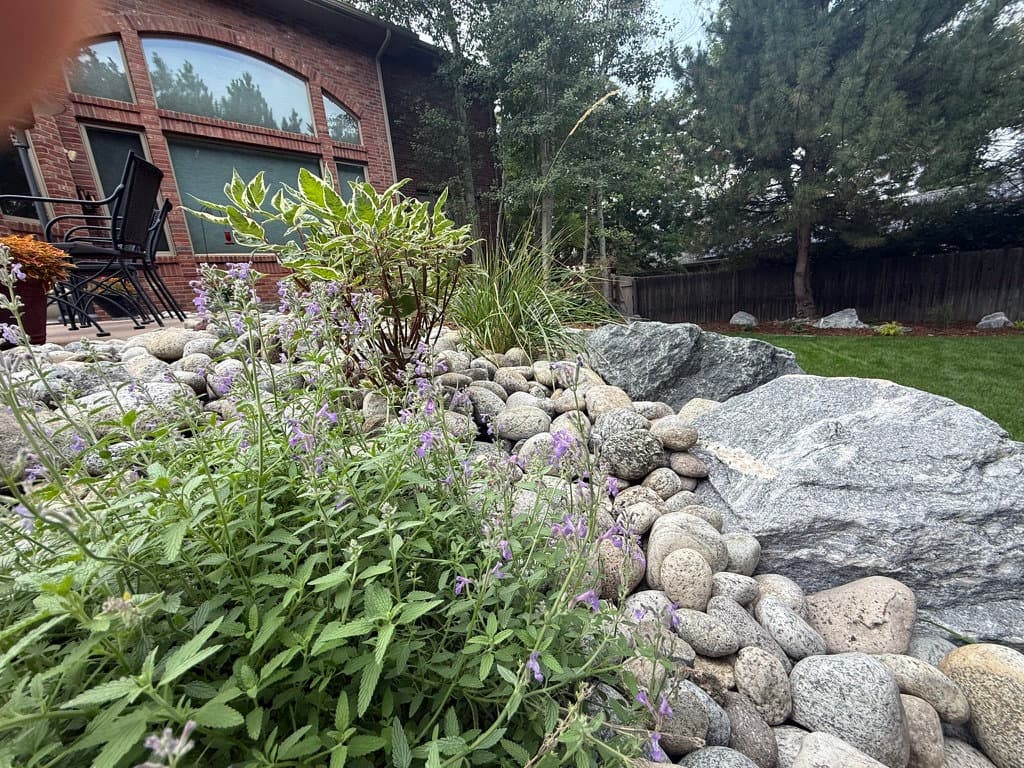
A planted xeriscape is the right fit when you want color through the seasons, pollinators, softer textures and the best rebate rates. It is built around native and adapted perennials, ornamental grasses and shrubs, grouped by water need and watered by drip.
A xeroscape style yard, built mostly with rock, boulders, gravel and hardscape, suits steep slopes, hot south and west exposures, side yards and anyone who wants the least upkeep possible. One caution from CSU Extension: rock stores and radiates heat, so avoid large areas of unshaded rock right next to the house. Adding even a few planting pockets softens the look and can help a rock heavy design qualify for rebates.
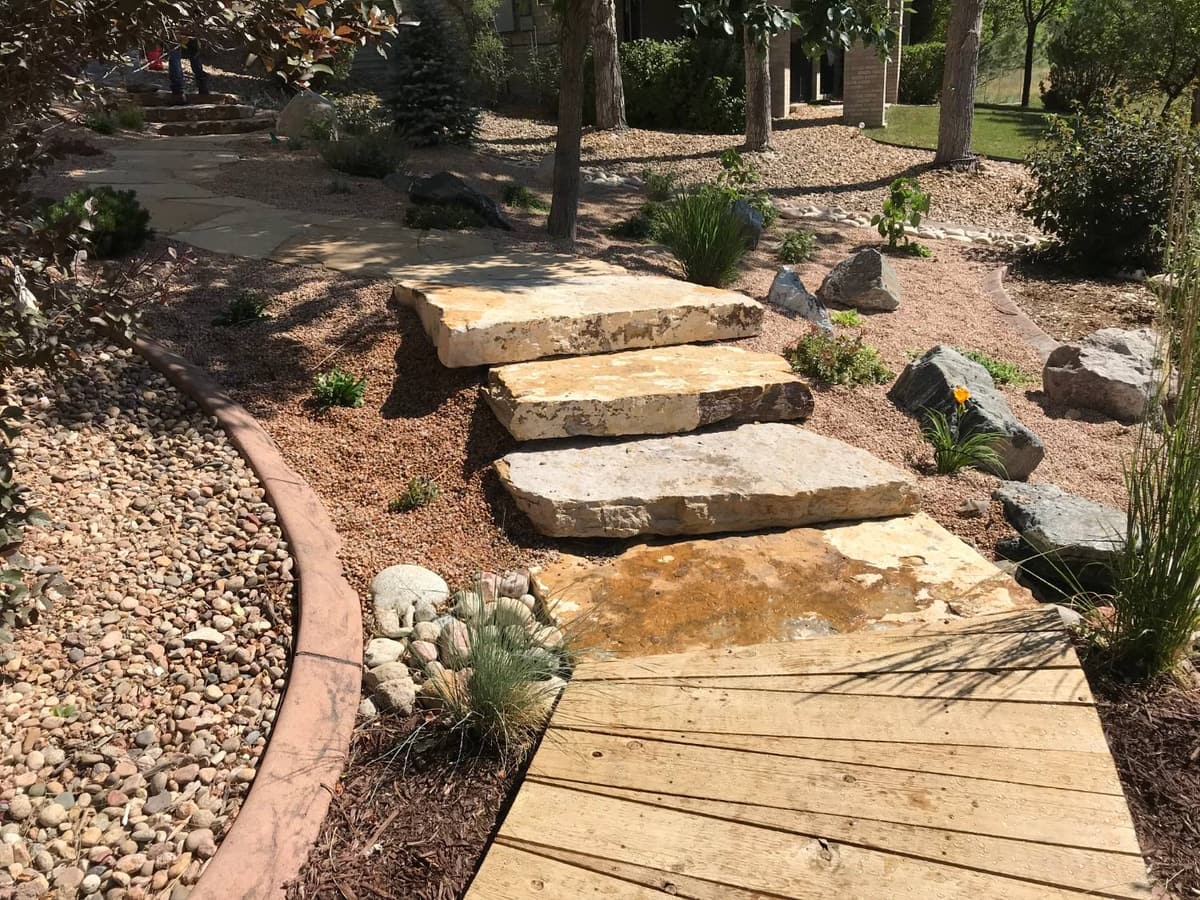
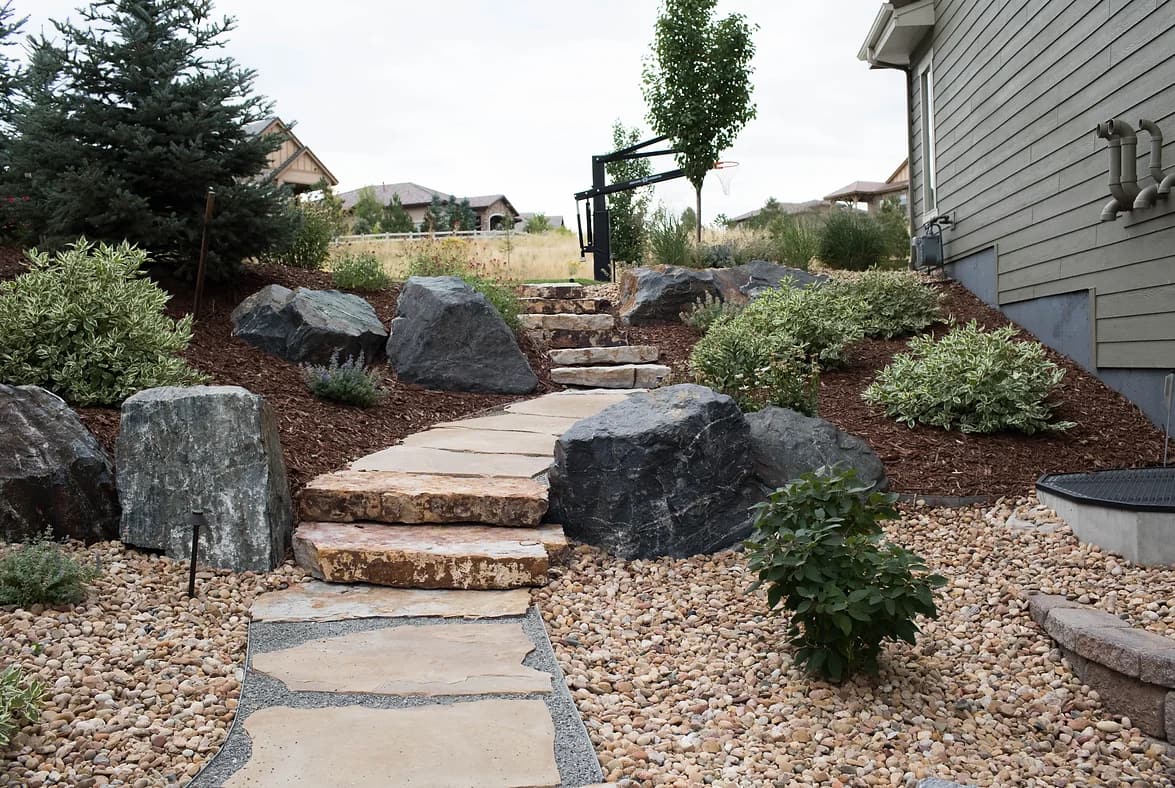
Many of our clients end up with both: a planted front yard that meets ColoradoScape rules, rock and boulder work on slopes and side yards, and a patio or fire pit where the old lawn used to be.
How a conversion works with us
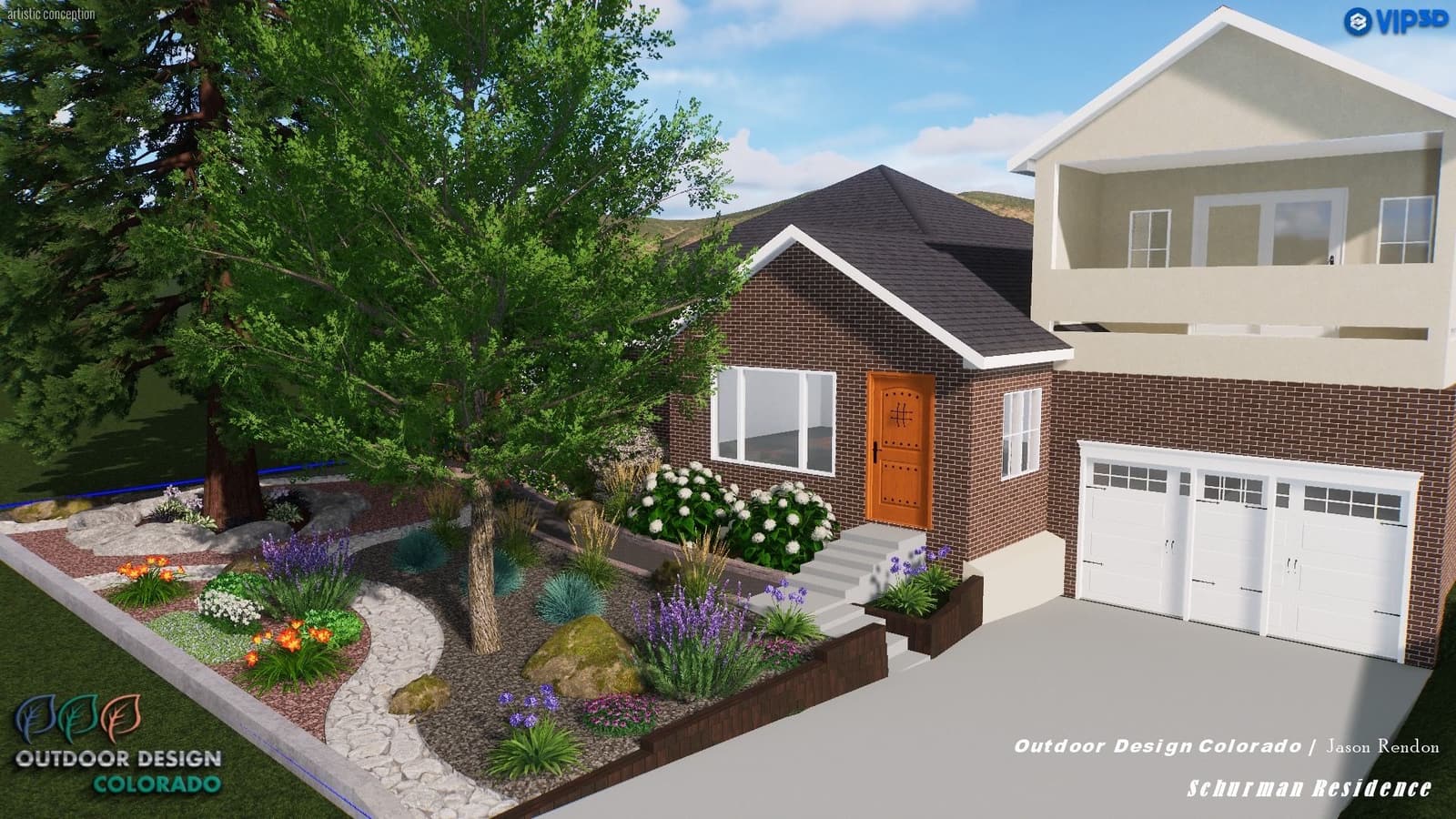
- Site visit. We walk the property, measure the lawn you want to replace and talk through how you use the yard.
- Design. We draw a plan that fits your budget, your HOA guidelines and, if you want a rebate, your water provider’s ColoradoScape standards.
- Approvals. We help you submit HOA and rebate applications before any work begins, since rebate programs require approval first.
- Build. Paths, patios, boulder walls and dry creek beds can be built through the fall and winter.
- Plant and water. Plants and drip irrigation go in when the season is right, with a watering plan for the first year.
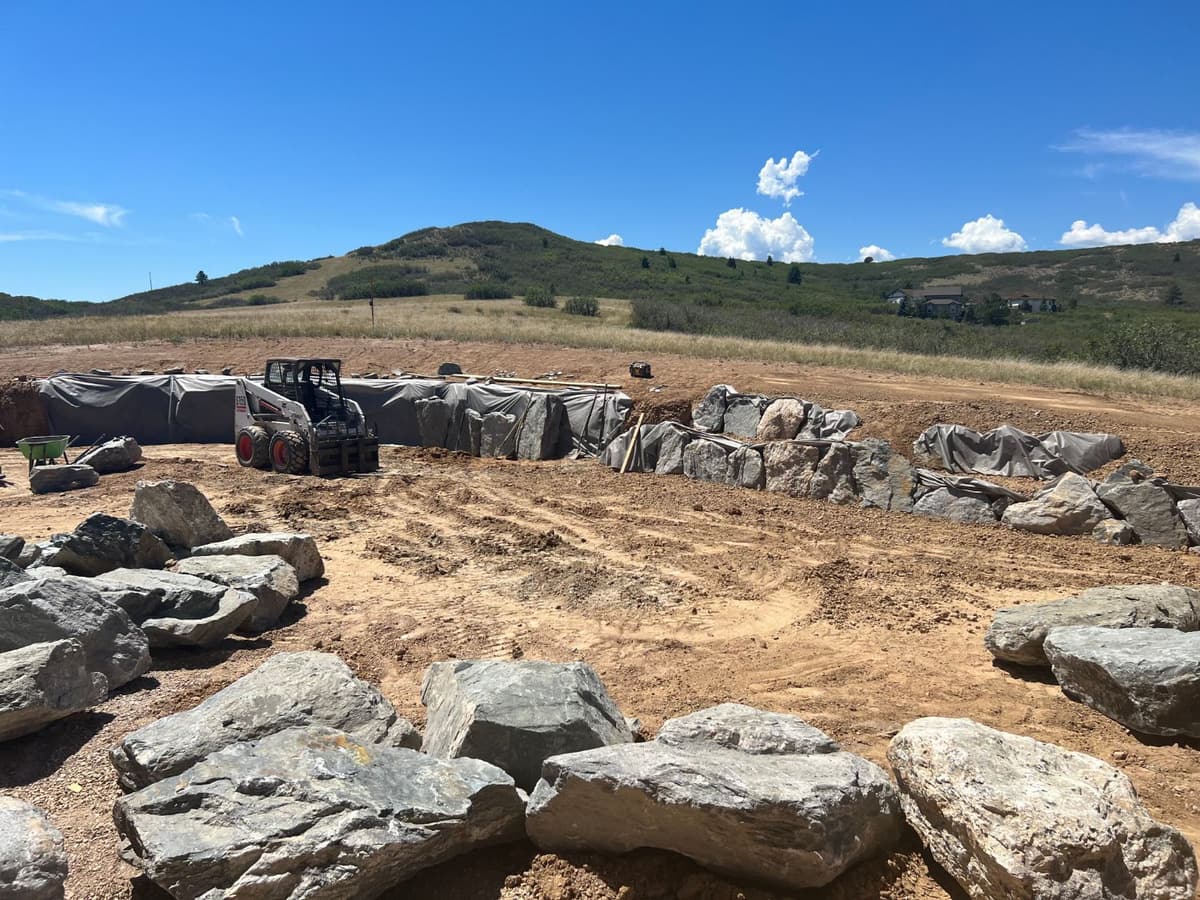
Rebate programs reopen in the spring and are first come, first served, so a design finished over the winter means your application can be ready the day they open. Read more about why October, November and December are the best months to build.
Serving every Douglas County community
We design and build xeriscapes and xeroscapes in Castle Rock, Parker, Highlands Ranch, Lone Tree, Castle Pines, Roxborough, The Pinery, Sterling Ranch, Larkspur, Franktown and Sedalia. That includes new build neighborhoods like Macanta, where backyard plans must be approved by the Town of Castle Rock before installation (Town of Castle Rock). See our landscape and hardscape work.
Ready to trade thirsty lawn for a water wise yard?
Book a free design consultation. We will measure your lawn, walk you through xeriscape and xeroscape options, and map out a plan and rebate timeline for your property.
Book a free consultationCommon questions
Is xeroscaping the same as xeriscaping?
No. Xeriscaping is a water wise design method, coined by Denver Water, that uses drought tolerant plants, good soil, mulch and efficient irrigation. Xeroscaping, or zeroscaping, usually means a yard made mostly of rock and gravel with few or no plants. Many good designs combine the two.
How much water does xeriscaping save?
It depends on how much lawn you replace and how it was watered. Denver Water says many customers use 18 gallons per square foot or more each year on bluegrass, so a 1,000 square foot lawn can take roughly 18,000 gallons a year. Drought tolerant plants on drip need far less, and CSU Extension rates drip irrigation at over 90 percent efficiency.
Can my HOA stop me from xeriscaping?
Not on a detached single family home in Colorado. Under SB23 178, HOAs cannot prohibit xeriscape or drought tolerant landscapes, though they can set design guidelines and may ask you to submit plans.
Does artificial turf qualify for rebates?
Not in Castle Rock or Highlands Ranch. Both programs exclude artificial turf.
When should I start planning?
Now. Highlands Ranch Water reopens its rebate March 1, 2027, Castle Rock Water expects 2027 details in April 2027, and both require approval before work starts. A plan finished over the winter puts you first in line.
Rebate amounts, program dates and rules in this article come from each water provider’s and agency’s website as of October 9, 2026. Programs change every year, so confirm the details with your provider before you apply. This article is general information, not legal advice.
Sources
- Castle Rock Water. (n.d.). Rebates: Residential ColoradoScape Renovation. Town of Castle Rock. Retrieved October 9, 2026.
- City of Fort Collins. (n.d.). Xeriscape and soil amendment policy update. Our City. Retrieved October 9, 2026.
- Colorado General Assembly. (2023). SB23 178, Water wise Landscaping in HOA Communities. Signed May 17, 2023; effective August 7, 2023.
- Colorado General Assembly. (2024). SB24 005, Prohibit Landscaping Practices for Water Conservation. Signed March 2024.
- Colorado State University Extension. (n.d.). Xeriscape basics (PlantTalk Colorado 1901). Retrieved October 9, 2026.
- Colorado State University Extension. (n.d.). Xeriscape mulches (PlantTalk Colorado 1905). Retrieved October 9, 2026.
- Denver Water. (n.d.). Xeriscape principles. Retrieved October 9, 2026.
- Fogleman, N. (2026, July 22). Castle Rock implements mandatory Stage 2 water restrictions. Colorado Politics.
- Hartman, T. (2019, April 22). Denver’s “green” water utility. Denver Water TAP.
- Highlands Ranch Water. (n.d.). Turf replacement program. Retrieved October 9, 2026.
- Kirk, J. (2019, July 11). How much water does your landscape really need? Denver Water TAP.
- Parker Water and Sanitation District. (n.d.). Rebates and discounts. Retrieved October 9, 2026.
- South Metro Water Supply Authority. (n.d.). Our members. Retrieved October 9, 2026.
- Town of Castle Rock. (n.d.). Landscape design for homeowners. Retrieved October 9, 2026.
- Town of Castle Rock. (n.d.). Understanding drought restrictions. Retrieved October 9, 2026.
- U.S. Environmental Protection Agency. (n.d.). WaterSense statistics and facts. Retrieved October 9, 2026.
- Wilson, C., and Bauer, M. (1998, reviewed 2025). Drip irrigation for home gardens (Fact Sheet 4.702). Colorado State University Extension.
Comments
Questions or ideas about this article? Share them below. Comments appear after a quick review by our team.